Low-Code Apps That Retire Clipboards on the Factory Floor
Step onto the production floor where speed, safety, and precision decide margins, and see how low-code apps replace clipboards without disrupting rhythm. This page explores low-code apps purpose-built to replace clipboards on the factory floor, accelerating checks, capturing proof, reducing defects, and unlocking real-time visibility your operators, supervisors, and customers can trust from the first shift onward.
When rush hour exposes paper’s limits

At changeover, handwritten notes blur, timestamps drift, and incomplete fields sneak through because no checkbox can shout back. Paper tolerates shortcuts; production reality punishes them. Digital forms enforce required steps, nudge for photos, and store everything instantly, so supervisors see exceptions immediately and can intervene before scrap grows expensive or customers ever notice a hiccup.
Day-one gains with low-code forms

Start with the most painful clipboard: pre-start checks, sanitation logs, or line clearance. Clone the existing layout, add validations, and publish without waiting on a release cycle. Operators keep their cadence, but errors stop slipping through. Metrics appear automatically, trends become visible, and those after-shift piles of paper disappear, freeing teams to solve problems instead of transcribing them.
A supervisor’s first digital shift

Marta used to chase signatures across three buildings after lunch break. On day one with low-code apps, alerts surfaced stalled checks before downtime started. She scanned a barcode, saw photos attached to a failed inspection, reassigned a task, and closed the loop within minutes. The line met quota, quality held, and nobody stayed late feeding spreadsheets.
Designing Workflows Without Writing Code
Drag-and-drop builders let process owners design forms, rules, and routing themselves, while IT governs access and security. You can mirror SOPs exactly, add conditional logic for complex products, and update steps anytime without releasing a new build. The result is a living system that adapts as lines change, products evolve, and continuous improvement demands faster iteration.
Connectivity That Works Where Wi‑Fi Doesn’t
{{SECTION_SUBTITLE}}

Offline-first, sync-later reliability
Operators can complete every field, take photos, and record signatures with no network at all. The app validates locally, queues transactions, and merges changes when connectivity returns. Conflict rules preserve truth without duplicate records. This means no excuses, no skipped checks, and no paper reintroductions just because the forklift battery room happens to eat Wi‑Fi before lunch.
Rugged tablets, shared kiosks, and gloves
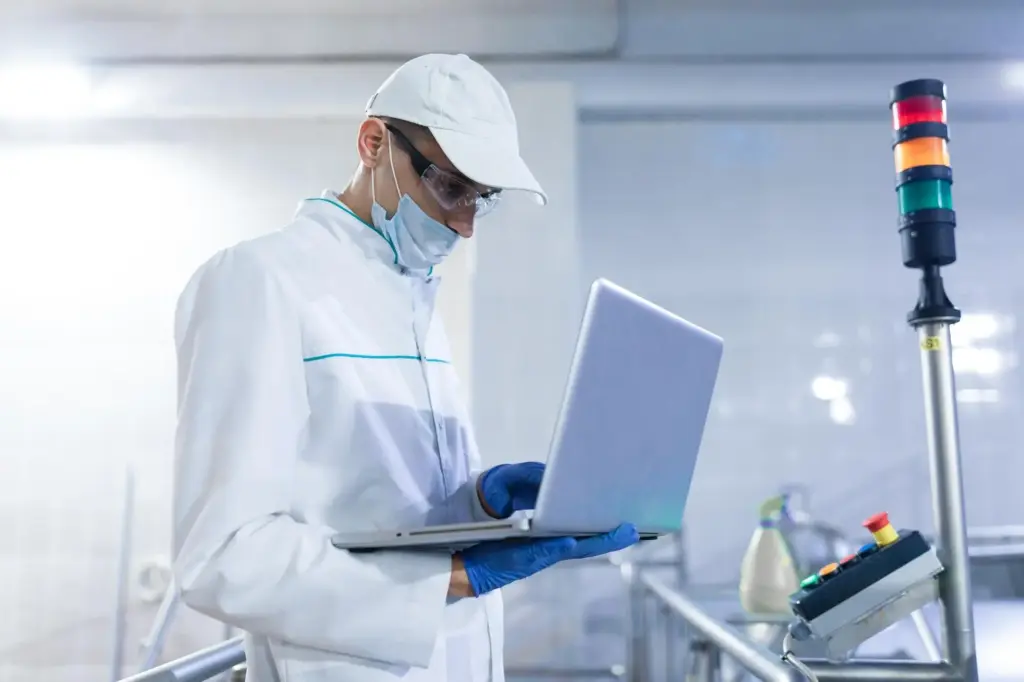
Oil, dust, and vibration demand devices that survive knocks. Configure large buttons, high-contrast modes, and hardware scanners that still work with thick gloves. Shared kiosk logins speed rotations while preserving accountability. When technology respects the environment, adoption accelerates. People trust tools that understand their world, not delicate gadgets that hide errors behind cracked screens and drained batteries.

Trusted records with time, user, and place
A reading means more when you know precisely who captured it, where, and on which asset. Low-code apps stamp identity and context without extra typing. If something looks off, you can ask the right person quickly. Root-cause analysis accelerates, and repeatable success becomes easier than firefighting because the facts are already organized and queryable.

Audit readiness for ISO, FDA, and customers
Instead of scrambling through filing cabinets, filter digital records by time range, product, and outcome. Show photo evidence, signatures, and linked corrective actions in one place. Auditors appreciate completeness, and customers feel protected. Compliance stops being an interruption to production and becomes a natural byproduct of doing the work correctly, consistently, and visibly every single shift.
ROI You Can Prove and Sustain
Digitization must pay for itself quickly. Start small, measure rigorously, and expand with proof. Low-code platforms enable pilots that go live in days, not quarters. Savings appear through fewer defects, quicker changeovers, shorter audits, and reclaimed supervisor time. Keep momentum by training champions, publicizing wins, and inviting frontline ideas that multiply the original return across lines.
Integrations Without Disruption
Low-code apps coexist with ERP, MES, and CMMS by exchanging just the right data. Start with read-only references to items and work orders, then write back results and exceptions. Use APIs and message queues to decouple traffic. Identity, device posture, and role-based access keep everything secure while operations benefit from real-time context where work actually happens.